
Why Do My Tights Roll Down? How to Stop Tights Falling Down
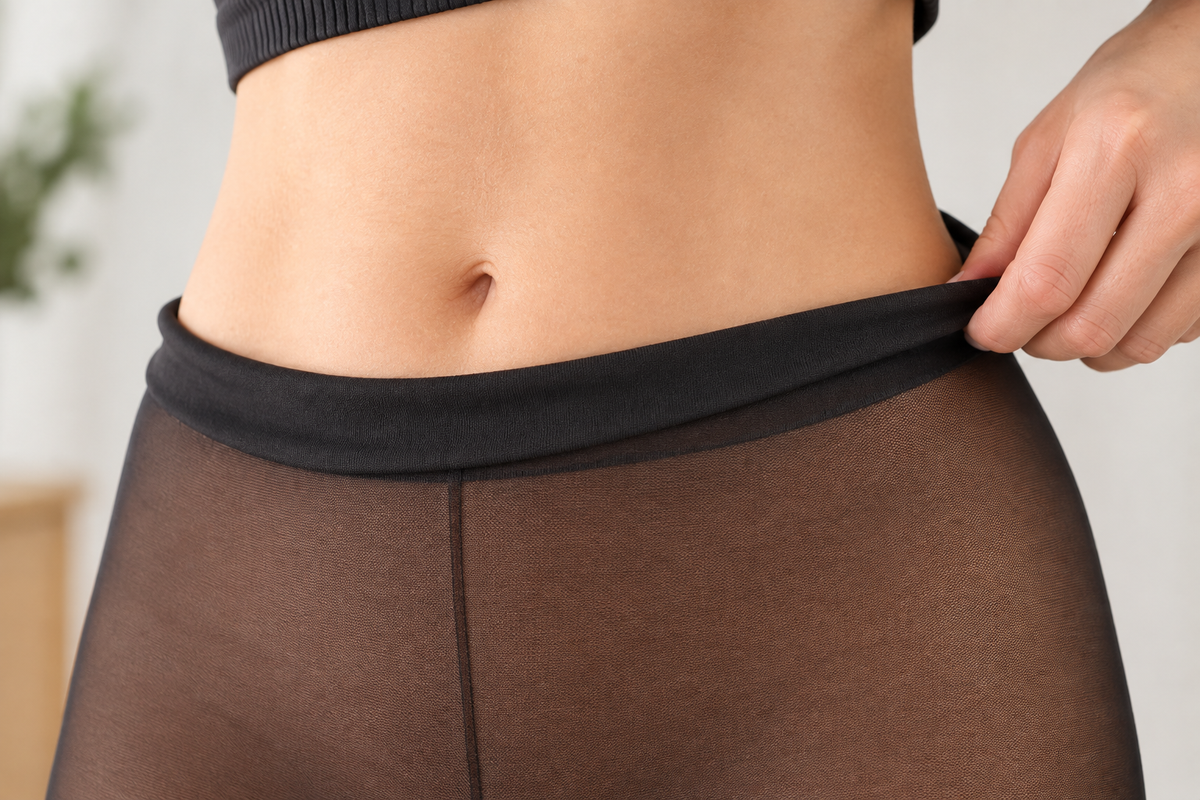
There's a particular kind of annoyance in having to hitch your tights up every twenty minutes. Whether you'd call it rolling down, sagging, or just tights that won't stay up, it's one of the most common tights complaints, and it's often fixable. Here's why it happens and what to do about it.
Why Tights Roll Down or Sag
One of the most common causes is sizing, though not always in the way people assume. Tights need to sit at the correct tension across the waist and hips. If they're too large, there's too little tension to hold their position. If they're too small, they can feel overly tight and may be more prone to stress and damage.
Construction matters too. Elastane content affects how snug and elastic a pair of tights feels, but the percentage isn't the only factor. Construction, sizing, and the style of the panty all contribute to how securely tights sit, so a higher elastane percentage on its own doesn't guarantee a better hold.
And as with any hosiery, elastic loses some of its recovery over time, particularly if tights have been washed incorrectly or worn well past their natural lifespan.
How to Stop Tights Falling Down
1. Size using height and hip, not habit. Measure your height and the fullest part of your hips, then check them against our size chart rather than assuming your usual size carries across styles.
2. Don't assume sizing down means more secure. If you're between sizes, going up is generally the more comfortable option. If you want a firmer feel within your correct size range, a shaping or control-top style is a better route than simply buying smaller.
3. Check the construction, not just the elastane content. The amount of elastane is only part of the equation. The panty construction, sizing, and overall design can all affect how securely tights sit.
4. Consider a control-top or shaping style if you need extra hold. See the section below.
5. Check the fit note for your specific style. Not all Elegante ranges are sized identically. Some are described as generous, some as average, and others as smaller than average, so always check the sizing guidance for the individual product rather than assuming your usual size will fit every style.
6. Follow the care instructions for your specific pair. Recommended washing can vary between styles, so check the label or product page rather than assuming the same method applies across the whole range. Avoid tumble drying, as heat can damage the fibres and affect elasticity over time.
7. Retire tights once the waistband has lost its stretch. All elastic fatigues eventually. If it no longer springs back after being stretched, that's wear rather than a sizing issue.
Do Control-Top Tights Stay Up Better?
Control-top tights can be a good option if your main problem is tights slipping or rolling down. The additional shaping and firmer panty construction can give a more secure feel around the waist and hips. Our Ultimate Bodytoner is designed with a firmer panty and shaping construction for those who prefer extra support, and it's worth considering if rolling down is a recurring issue for you rather than a one-off.
Signs You Might Have the Wrong Size
If tights are difficult to get into position, feel excessively stretched, or keep sagging no matter how you adjust them, it's worth rechecking both your own measurements and the specific sizing guidance for that product, rather than assuming your usual size will automatically work.
Quick Checklist
- Measure height and hips, and check against the size chart for that specific style
- Don't size down purely for a tighter feel; try a control-top style instead
- Remember elastane content is one factor among several, not a guarantee of hold
- Consider a shaping style like the Ultimate Bodytoner if rolling down is a regular problem
- Check the care label for your specific pair before washing
- Retire tights once the elastic has lost its recovery
Get the fit right for the specific style you're wearing, and tights rolling down should become much less of a problem.
Keep reading
More from the journal
-
How to Stop Tights Laddering: 8 Simple Ways to Make Your Tights Last Longer
Prevent ladders, runs, and snags in your sheer tights. 8 practical tips on putting on hosiery correctly, washing techniques, and choosing reinforced...
Read article -

What Denier Tights Should I Wear? A Complete Style Guide
Understand hosiery deniers from sheer 15D to warm 50D opaques. Learn how to choose the right opacity, finish, and thickness for every...
Read article -

From Sheer Tights to Opaque Tights. What's the difference?
Compare sheer, semi-opaque, and fully opaque tights. Discover how yarn construction, light transmission, and denier ratings create different styles and warmth.
Read article


