
How to Stop Tights Laddering: 8 Simple Ways to Make Your Tights Last Longer
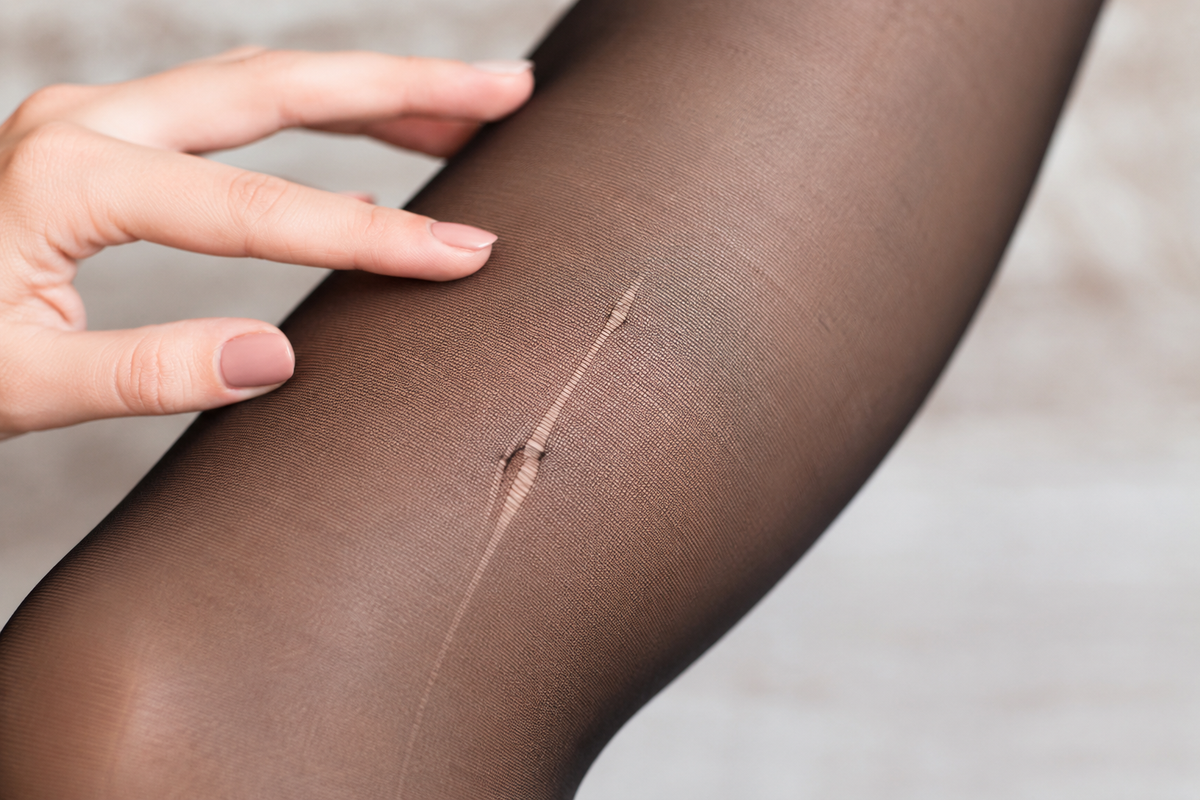
Few things are more annoying than putting on a fresh pair of tights and spotting a run before you've even left the house. Whether you call it a ladder or a run, damaged tights are frustrating, particularly when it happens to a brand-new pair. The good news is that most ladders aren't bad luck. They're usually caused by one of a handful of avoidable things, from fit to handling to how they're washed. Here's what actually causes tights to ladder, and eight practical ways to make yours last longer.
Why Tights Ladder in the First Place
A ladder starts the moment a single stitch in the knit breaks. Once a stitch breaks, the tension in the knitted fabric can cause the damage to spread, creating the familiar run or ladder. What causes that first break varies. Snagging on something rough is the most obvious culprit, but fit, handling, and the wear and tear of everyday life all play a part too. Yarn and construction quality matter, but so does everything you do with your tights between buying them and putting them on.
8 Ways to Stop Tights Laddering
1. Check the size chart properly. Every brand sizes slightly differently, so go by the manufacturer's own height and weight guide rather than guessing. Tights that are too small are under constant extra tension, which makes every stitch more likely to give way. Don't deliberately size down for a tighter look, and don't assume your usual size in one brand will fit the same in another.
2. Remove jewellery before putting them on. Rings, bracelets and watches are one of the most common causes of a snag in the first thirty seconds of wear.
3. Check your hands and nails. Rough or jagged nails catch easily on delicate knit. A quick check (and a file if needed) before you get dressed takes seconds.
4. Ease them on gradually. Bunch the fabric from the toe and work them up slowly rather than pulling sharply from the waistband. Sudden tension in one spot is exactly the kind of stress that breaks a stitch.
5. Watch out for rough surfaces. Wicker chairs, car seat edges, handbag buckles and rough flooring can all snag tights during a normal day, not just while you're getting dressed.
6. Wash by hand, with the right detergent. Hand washing in cool water is the gentlest option and the one we recommend for all Elegante tights. Use a non-biological washing powder or a delicate handwash liquid suitable for silks. Harsh detergents and machine agitation both put unnecessary strain on the fibres.
7. Skip the tumble dryer. High heat can shorten the life of hosiery, particularly when combined with the movement and friction of a tumble dryer. Hang or lay them to dry away from radiators and direct heat, and avoid wringing. Pressing out excess water gently is enough.
8. Store them away from anything sharp. Keep tights in their own drawer or pouch, separate from items with zips, Velcro, hooks or jewellery, which can snag them even before they're worn.
What to Do If a Ladder Has Already Started
Once a stitch has broken, you can't fully repair it, but you can sometimes slow it down. A small dab of clear nail polish around the end of a small ladder can sometimes help prevent it spreading further. It's only a temporary fix, but it can buy you time until you can change into another pair.
Can You Prevent Tights From Laddering Completely?
Unfortunately, no. Hosiery is made from fine knitted fibres, so a sufficiently sharp snag or excessive tension can damage any pair, however well made. The aim isn't to make tights indestructible, but to reduce the things that put unnecessary stress on the fabric. Choosing the right size, handling tights carefully, and washing them properly can all help extend their life, even if they can't guarantee a ladder never happens.
What to Look for When Buying Tights That Last
Prevention starts with the fabric itself. When choosing tights, it's worth checking for a reinforced toe and gusset (the areas that take the most strain), a consistent denier throughout with no thin patches, and flat, well-finished seams. Getting the right size for your height and weight, using the brand's own chart rather than a guess, matters just as much as the tights themselves.
Our Ultimate range features reinforced toes and a flat waistband, designed for everyday comfort and durability. If you're looking for everyday hosiery at a lower price point, our Essentials range also uses reinforced-toe construction.
Quick Checklist
- Follow the brand's actual size chart
- Remove jewellery before dressing
- Check nails are smooth
- Ease tights on gradually, don't yank
- Avoid rough furniture and surfaces
- Hand wash in cool water with a non-biological powder or silk-delicate liquid
- Never tumble dry
- Store away from zips, Velcro and sharp edges
Look after them well, and even an everyday pair should go the distance.
Keep reading
More from the journal
-
Why Do My Tights Roll Down? How to Stop Tights Falling Down
Tired of tights slipping or rolling at the waist? Learn why tights roll down, how sizing affects waistband grip, and how control...
Read article -

What Denier Tights Should I Wear? A Complete Style Guide
Understand hosiery deniers from sheer 15D to warm 50D opaques. Learn how to choose the right opacity, finish, and thickness for every...
Read article -

From Sheer Tights to Opaque Tights. What's the difference?
Compare sheer, semi-opaque, and fully opaque tights. Discover how yarn construction, light transmission, and denier ratings create different styles and warmth.
Read article


